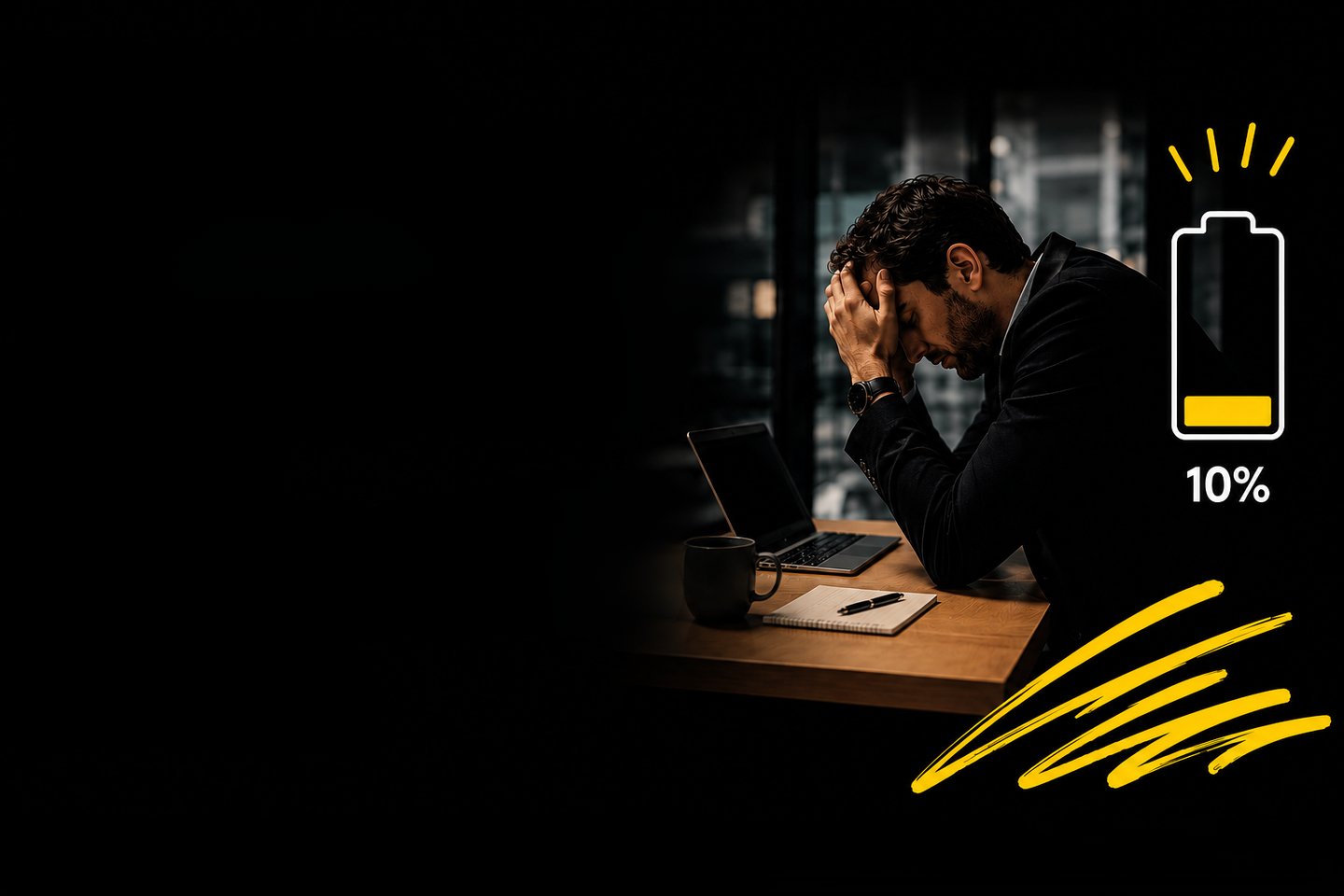
WHY ARE SO MANY EMPLOYEES RUNNING ON EMPTY?
When organisations discuss performance, the conversation usually centres around productivity, efficiency, engagement, leadership or culture.
Rarely does it begin with energy.
Yet energy may be one of the most overlooked drivers of organisational performance.
Businesses invest heavily in systems, technology and training to improve output. They introduce new processes, performance frameworks and management initiatives. However, even the best systems struggle to deliver results when the people expected to use them are physically and mentally depleted.
The reality is simple.
People perform work.
And people require energy to perform.
The question business leaders should be asking is not simply:
“How productive are our employees?”
But:
“Do our employees have the capacity to be productive?”
Energy Is The Foundation Of Performance
Most leaders understand that tired employees are unlikely to perform at their best.
What is less commonly recognised is how many workplace outcomes are influenced by energy levels.
Energy affects:
Concentration
Decision-making
Problem-solving
Creativity
Emotional regulation
Communication
Resilience
Motivation
When energy declines, these capabilities decline alongside it.
The result may not immediately appear as sickness absence. Instead, it often manifests as presenteeism — employees who are physically present but unable to perform at their normal capacity.
Research commissioned by the UK Government and undertaken by RAND Europe estimated that presenteeism costs UK employers significantly more than absenteeism, with reduced productivity representing a substantial hidden business cost.
Many organisations are measuring attendance while overlooking capacity.
The Hidden Drain On Workplace Energy
A common assumption is that low energy is caused solely by excessive workload.
Workload certainly plays a role.
However, energy is influenced by a combination of factors both inside and outside work.
These include:
Poor sleep quality
Physical inactivity
Nutritional habits
Chronic stress
Lack of recovery time
Long periods of sedentary work
Poor work-life boundaries
An employee may technically be at work for eight hours but spend much of the day operating below their potential because their physiological resources are depleted.
This creates a performance ceiling.
No amount of motivation or management pressure can consistently overcome a lack of energy.
The Business Cost Of Running On Empty
Low energy impacts organisations in ways that are often difficult to measure directly.
For example:
An employee who is tired may take longer to complete tasks.
A manager experiencing chronic fatigue may make poorer decisions.
A team with low energy may communicate less effectively and become more reactive under pressure.
Over time these small reductions accumulate.
Projects take longer.
Errors increase.
Customer experiences suffer.
Innovation slows.
Engagement falls.
Retention becomes more difficult.
None of these outcomes may be recorded as “low energy” on a business report.
Yet energy may be influencing all of them.
Why Wellbeing Initiatives Often Miss The Mark
Many workplace wellbeing programmes focus primarily on awareness.
Employees attend seminars.
They receive educational materials.
They learn about healthy behaviours.
Awareness is important.
However, awareness alone rarely changes behaviour.
Most people already know they should sleep more, move more and manage stress more effectively.
The challenge is creating environments that support those behaviours.
This is where organisations have a significant opportunity.
Rather than treating wellbeing as an optional employee benefit, leaders can view it as a performance strategy.
The objective is not simply healthier employees.
The objective is employees who have the energy and capacity to perform consistently.
What High-Energy Workplaces Do Differently
Organisations that support employee energy often focus on small but meaningful changes.
Examples include:
Encouraging movement throughout the working day.
Providing education around sleep and recovery.
Reducing unnecessary meetings.
Promoting realistic workloads.
Supporting healthy workplace habits.
Training managers to recognise early signs of energy depletion.
These interventions may appear simple.
Yet collectively they can significantly influence employee capacity and performance.
The goal is not perfection.
It is creating conditions that allow people to consistently bring their best selves to work.
Energy Is A Business Resource
For many organisations, energy is treated as an individual responsibility.
Employees are expected to manage it themselves.
While personal responsibility matters, organisations also influence the environment in which energy is created, maintained or depleted.
Businesses carefully manage financial resources.
They monitor operational resources.
They track productivity metrics.
Perhaps it’s time more organisations viewed employee energy as a strategic resource too.
Because when people have the energy to perform, organisations are far more likely to achieve the outcomes they want.
Practical Takeaways
Start discussing employee energy alongside productivity and engagement.
Recognise that low performance may sometimes be a capacity issue rather than a capability issue.
Consider how workplace culture, workload and wellbeing habits influence energy levels.
Focus on creating environments that support recovery, movement and sustainable performance.
Treat wellbeing as a performance strategy rather than a standalone initiative.
Organisations don’t achieve high performance by demanding more energy from people.
They achieve it by helping people maintain the energy they already have.
References
RAND Europe. Health, Wellbeing and Productivity in the Workplace.
UK Government. Thriving At Work Review.
CIPD. Health and Wellbeing at Work Survey.
NHS. Every Mind Matters: Sleep and Wellbeing.
HSE. Work-Related Stress, Anxiety or Depression Statistics.

About workplace Seminars
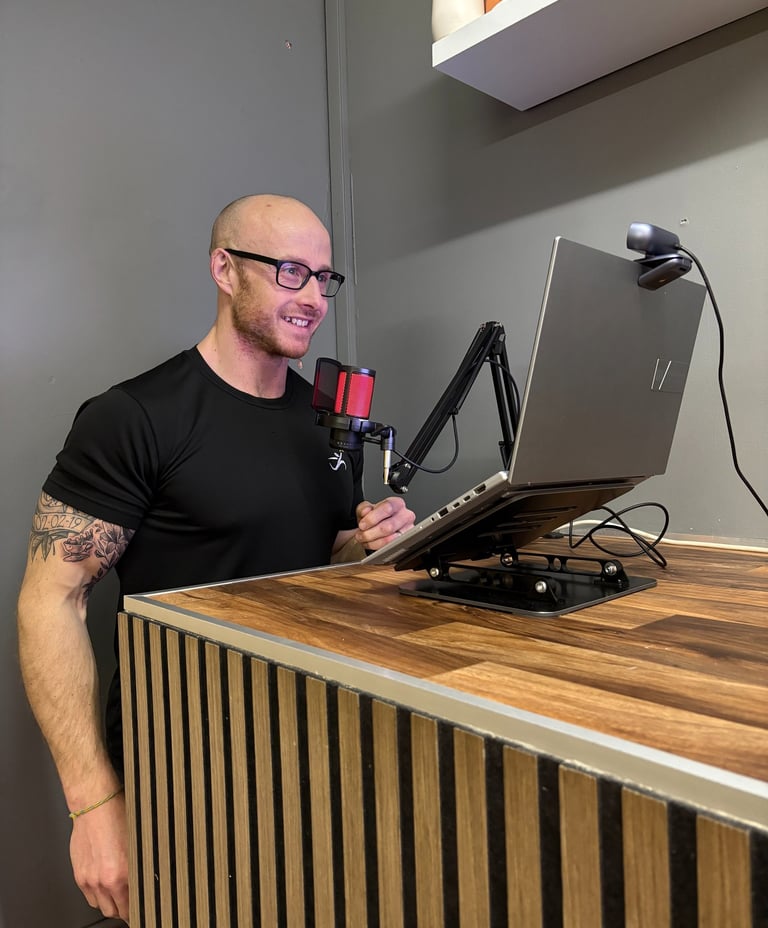
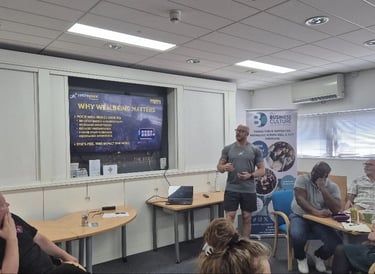
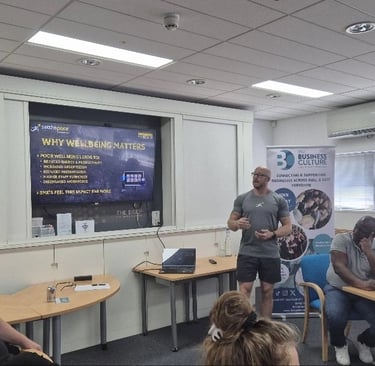
These high-impact one-hour wellbeing seminars can be delivered either in person at your workplace or online, giving businesses a practical and cost-effective way to support a healthier, happier and more engaged team. Each session provides clear, actionable strategies that empower employees to take control of their health, fitness and wellbeing — helping organisations improve energy, productivity and overall workplace performance.




Wellbeing Seminar Structure
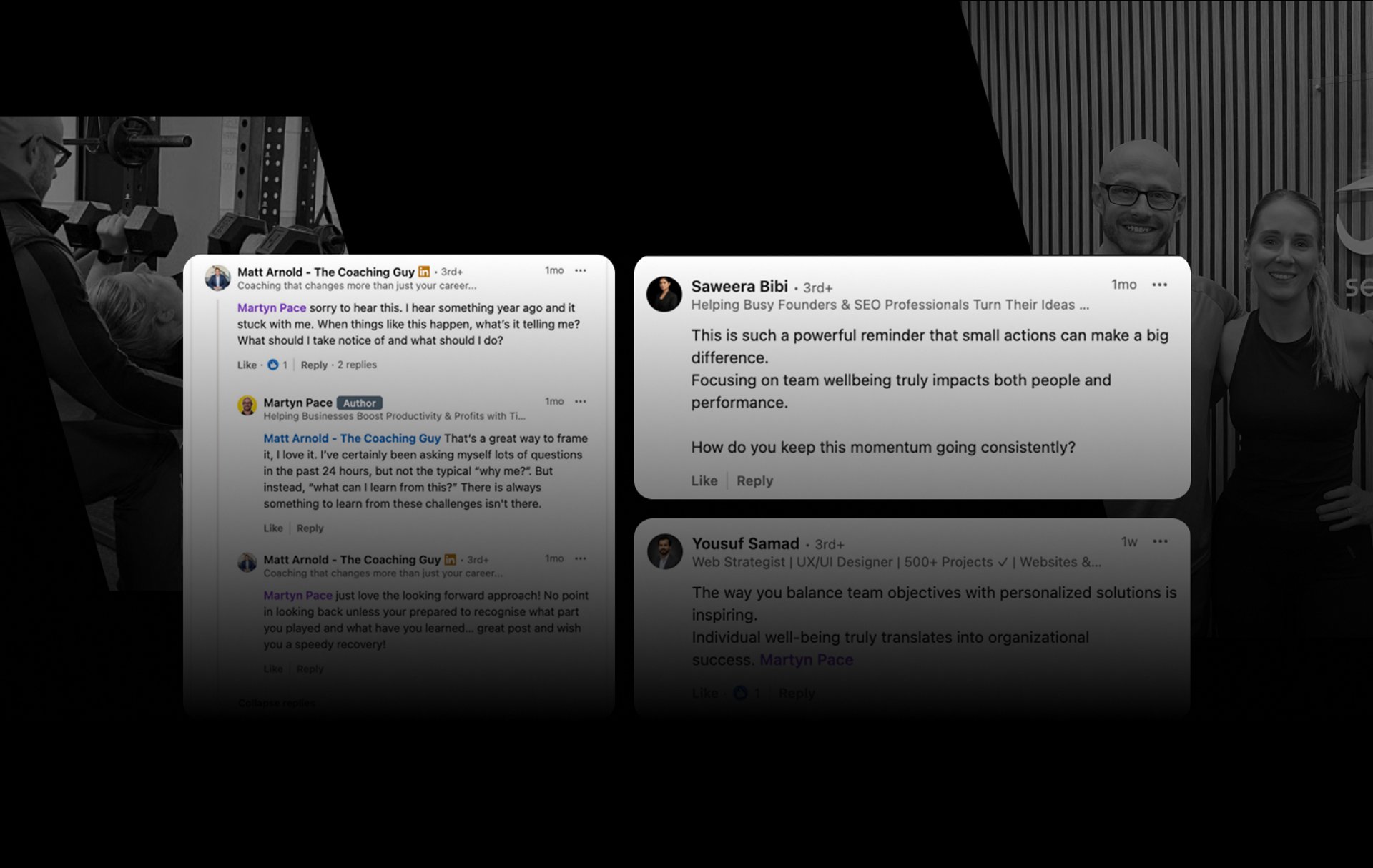
The seminars are built around six core wellbeing pillars: habit development, nutrition, musculoskeletal health, movement and exercise, lifestyle factors, and wellbeing at work. Businesses can select individual seminars based on their team’s needs, or choose a discounted package including all six sessions to deliver a complete and impactful workplace wellbeing programme.


what our clients say...

"I have found these seminars so informative. I never knew just how much of an effect being even a little dehydrated would have. Since learning this, I've increased my water intake and already I feel so much better - both at work and in my training sessions. I can't wait for the next one".
Jason - Carter Burnett
"Martyn's wellbeing education seminars have been so helpful for me and my team. Generally, we all fit and well but none of us really appreciated the impact that stress and sleep can have on my body and mind - these sessions have been so enlightening and have had a profound impact on our lifestyles".
James - Headstar
"These seminars are fantastic. We've had great feedback from the team, and every session always sparks more healthy conversations in the office. They're really informative - thank you".
Lucy - Superfly


explore our other services
Subscribe to our newsletter
By signing up, you will receive exclusive tips, advice and more straight to your inbox.